


Inclined Dumbbell Hammer Bench Press
Reps10 times
Calories burned144 kcal
LevelBeginner

Changing duration and load is available in our application
Lie on an incline bench with a dumbbell in each hand at hip level. The palms of both hands are turned inward, towards each other. Using your upper thighs, move the dumbbells up to your shoulders. Raise the dumbbells up, palms still facing inward, towards each other. Keep your elbows abducted and bent, forearms perpendicular to your torso, with a 90-degree angle between forearm and shoulder. As you inhale, slowly lower the dumbbells, carefully controlling their movement. As you exhale, squeeze the dumbbells up using the pectoral muscles. Lock your hands in this position, after a second pause, start moving down again. Hint: going down should take twice as long as going up. Perform the required number of repetitions, according to your training program. When finished, move the dumbbells to your upper thigh and then to the floor. Variations: You can use different bench angles. You can also use a traditional dumbbell grip (palms facing forward) for this exercise. You can also keep your palms facing each other, and during the upward movement, rotate your wrists, turning your palms forward, away from you.
How to perform the exercise
10 times
144 kcal
Control your movement and do not rush.
01
Starting position
Lie on an incline bench with dumbbells at your hips, palms facing each other.
02
Bring dumbbells up
Move the dumbbells to your shoulders and press them up, palms still facing inward.
03
Arm position
Elbows are out and bent, forearms perpendicular to the torso, with a 90-degree angle between forearm and upper arm.
04
Lowering
Inhale and slowly lower the dumbbells.
05
Press
Exhale and press them up using your chest muscles.
06
Tempo
Lowering is twice as slow as the press. When finished, move the dumbbells to your thighs, then to the floor.
Variants
Beginner
Use light dumbbells and a partial range of motion.
Middle
Work with moderate weight and keep a neutral grip.
Professional
Increase weight and control the slow lowering phase.
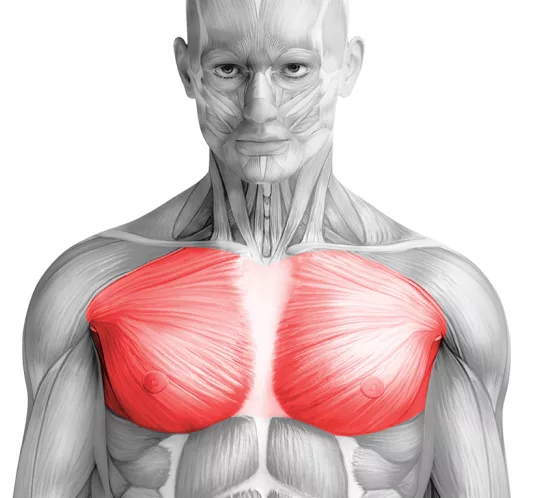
Which muscles are working
Chest, shoulders and triceps


Benefits of the exercise
Strength
Strengthens the chest and triceps.
Balance
Improves control of a neutral grip.
Simply
May reduce shoulder stress due to hand position.

Contraindications
Acute pain in the chest, shoulders or back.
Recent injuries to the shoulder, chest or wrists.
Medical prohibition of strength training.

Recommendations
Grip
Keep your palms facing each other.
Elbows
Keep your elbows at about 90 degrees.
Tempo
Do not rush the lowering phase.


