

Baked salmon
WHAT YOU WILL NEED
From ingredients
5 products


SIMPLE PROCESS
Step by step recipe
The key to juicy salmon is avoiding overcooking. Let the fillet marinate with lemon juice, salt, and pepper for about an hour, then seal it tightly in parchment before baking. This traps steam and helps the fish cook gently in its own juices. Bake the salmon at 200°C first while fully covered, then open the parchment and return it to the oven for a few more minutes. The final uncovered bake creates an appetizing golden surface without sacrificing the tender texture inside.
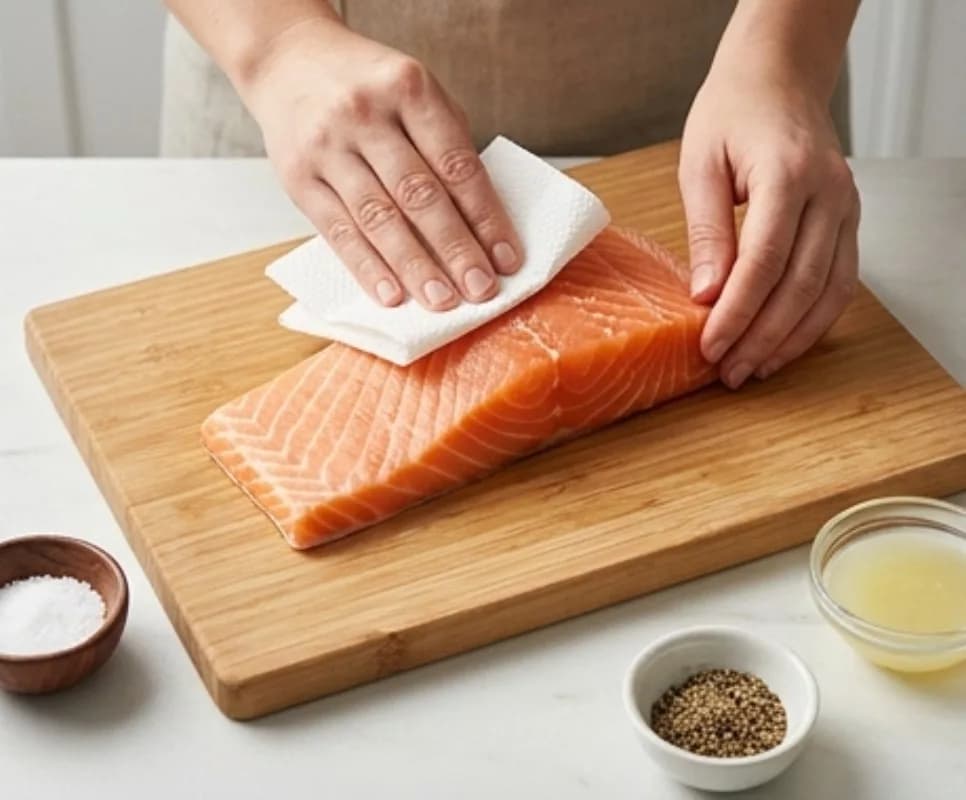
Prepare the salmon
Pat the salmon fillet dry with paper towels and remove any remaining pin bones if needed. Place the fish on a clean work surface or in a shallow dish.

Season and marinate
Season the fillet with salt and black pepper on both sides, then drizzle evenly with lemon juice. Add ground red pepper or a little rosemary if desired. Cover and let the salmon marinate for about 1 hour.
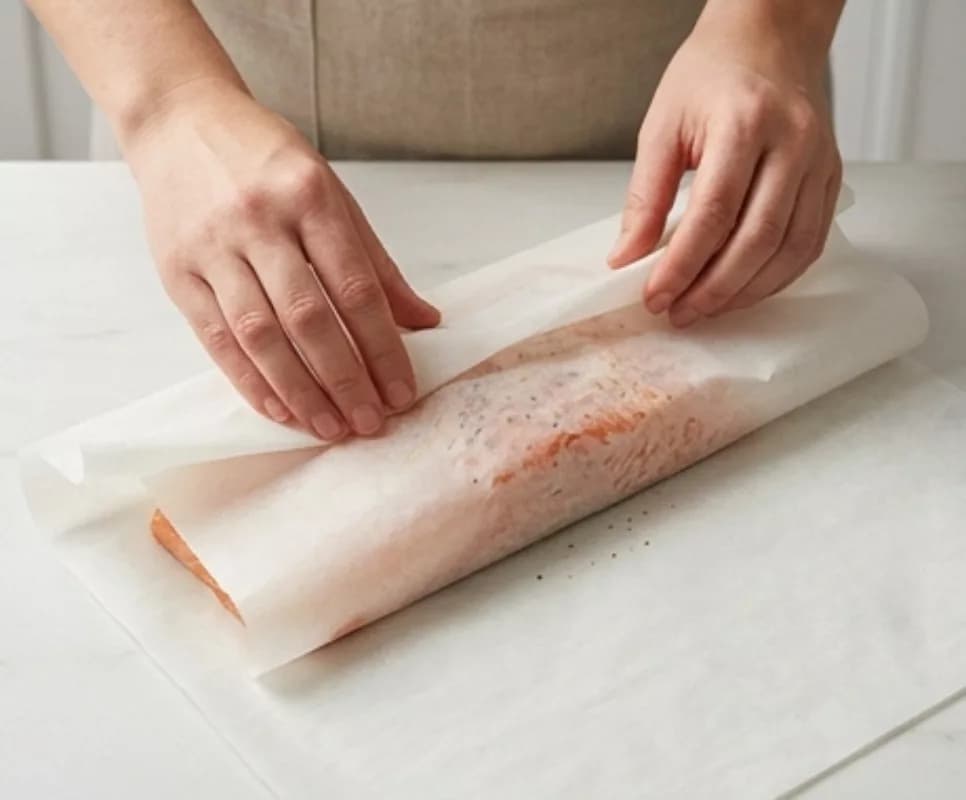
Wrap in parchment
Place the marinated salmon on a sheet of parchment paper and wrap it tightly on all sides. The fish should be completely enclosed so the steam and natural juices stay inside.
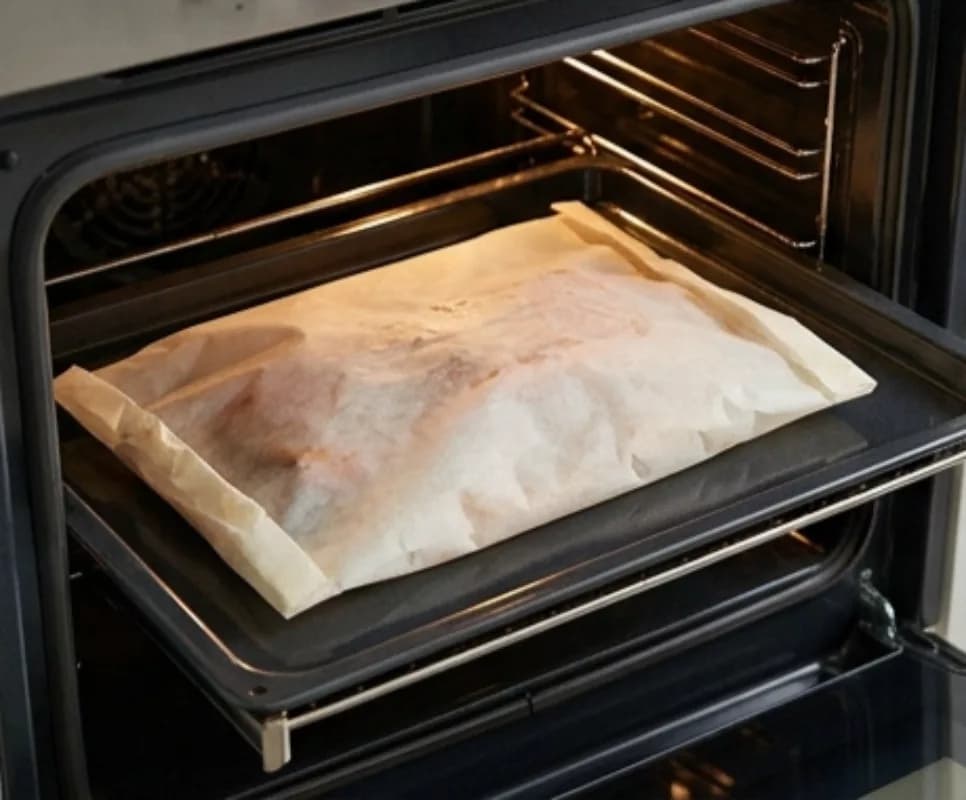
Bake covered
Preheat the oven to 200°C. Place the wrapped salmon on a baking sheet and bake for about 15 minutes. Keep the parchment closed during this stage to retain moisture.

Brown the salmon
Carefully open the parchment, watching out for hot steam. Return the salmon to the oven uncovered for another 5–7 minutes, until the top becomes lightly golden and appetizing.
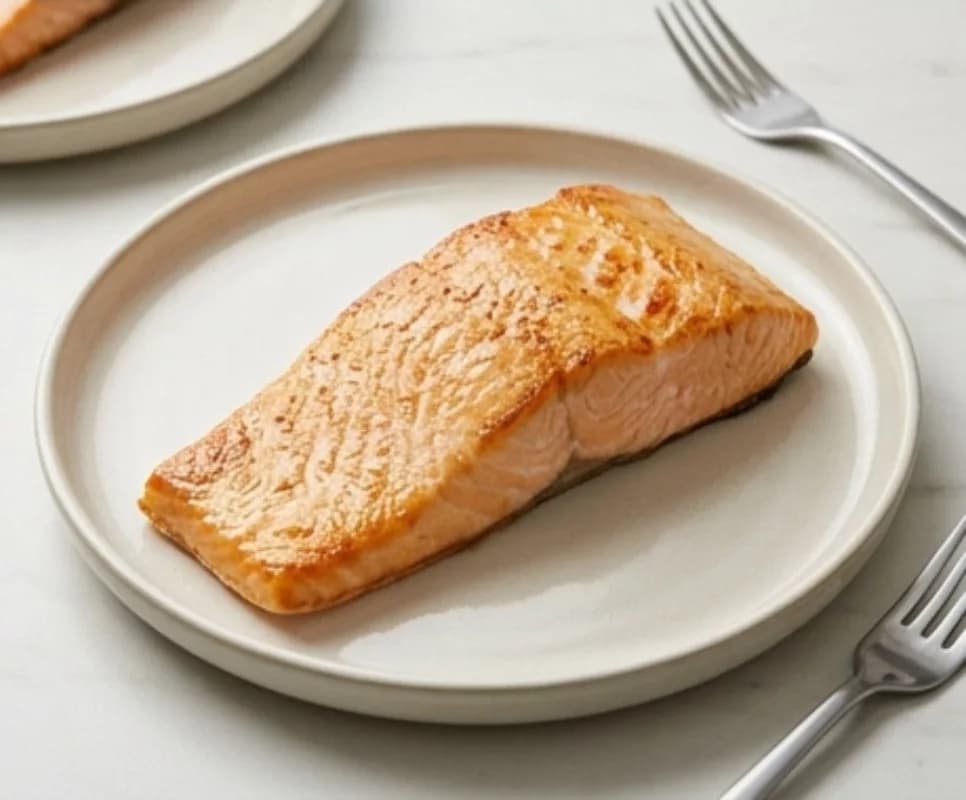
Serve
Remove the salmon from the oven and let it rest for a few minutes. Serve hot, dividing the fillet into portions just before serving.
CHEF'S TIP
Start with quality salmon
Use fresh salmon or properly thawed frozen fillets. The fish should have a firm texture, natural color, and a clean, fresh smell.
Give it time to marinate
Let the salmon sit with lemon juice, salt, and pepper for about an hour. This gives the seasoning time to penetrate the fish and brings out its natural flavor.
Seal the parchment well
Keep the salmon completely enclosed during the first stage of baking. Trapped steam helps the fillet cook in its own juices and stay exceptionally moist.
Watch the final minutes
Once the parchment is opened, avoid overbaking the salmon. Five to seven minutes is enough to brown the surface while keeping the center juicy.
SUBSTITUTIONS
Add your taste
- Use white pepper Ground black pepper can be replaced with white pepper for a milder, more delicate pepper flavor that pairs nicely with salmon.
- Add fresh rosemary Fresh rosemary can be added alongside or instead of the ground red pepper. Its herbal aroma works especially well with salmon and lemon.
- Try lime juice Replace the lemon juice with the same amount of fresh lime juice for a slightly sharper and more vibrant citrus flavor.
- Make it mild For a completely non-spicy version, simply leave out the red pepper and season the salmon with salt and black pepper.
HOW TO STORE
How to Store Oven-Baked Salmon
Let the cooked salmon cool completely, then transfer it to an airtight container and refrigerate. Store it for up to 2 days at around 4°C. Reheat gently in a low oven or in the microwave using short intervals to help prevent the fish from drying out. Cooked salmon can also be frozen when tightly wrapped and placed in a freezer-safe container. Thaw it gradually in the refrigerator before gently reheating.
GOOD TO KNOW