

Boiled chicken eggs

SIMPLE PROCESS
Step by step recipe
To get eggs exactly the way you want them, follow the timing closely and immediately transfer them to an ice bath. This stops the cooking process and makes peeling effortless. Adding salt to the water helps the egg white set quickly if the shell cracks. Follow these clear instructions for perfect results every time.
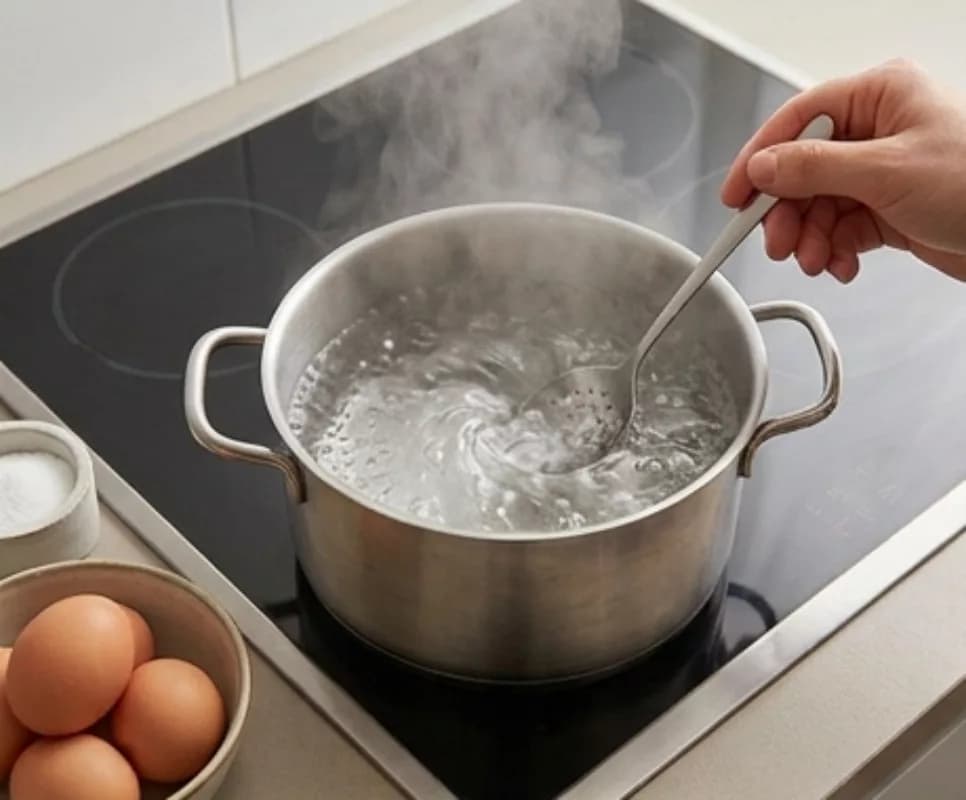
Boil the Water
Fill a pot with water and bring to a boil. Add 1 teaspoon of salt to help the egg white set if the shell cracks. Reduce to a medium simmer.
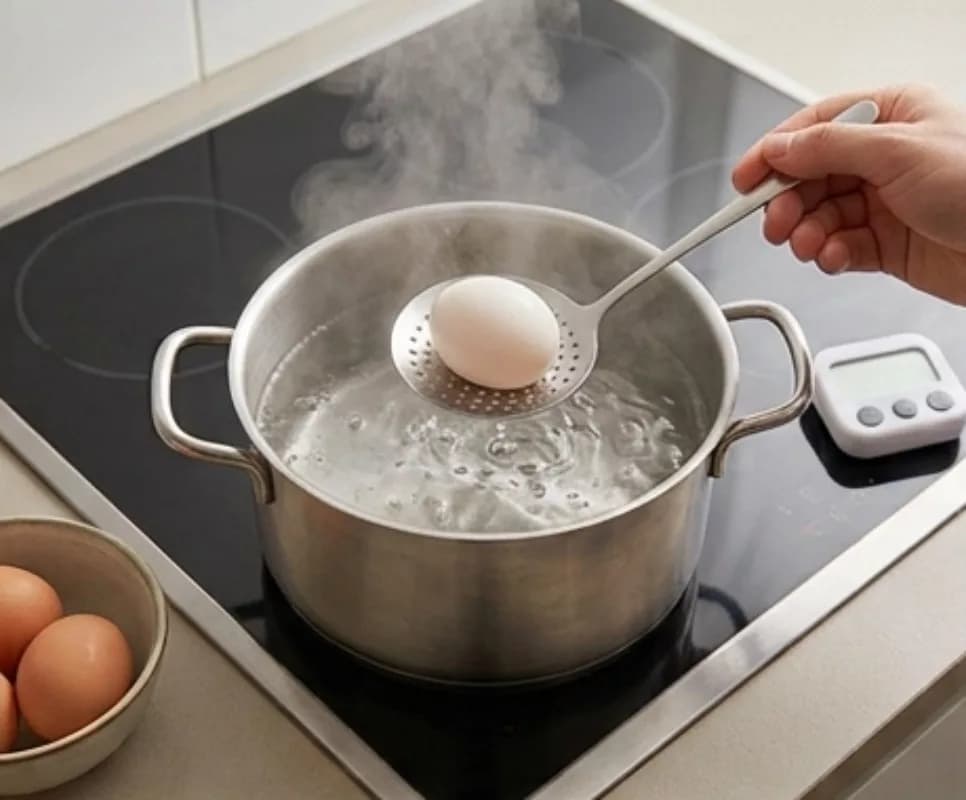
Gently Add the Eggs
Using a spoon or slotted spoon, carefully lower the eggs into the boiling water. Do this gently to prevent cracks. Ensure the water completely covers the eggs.
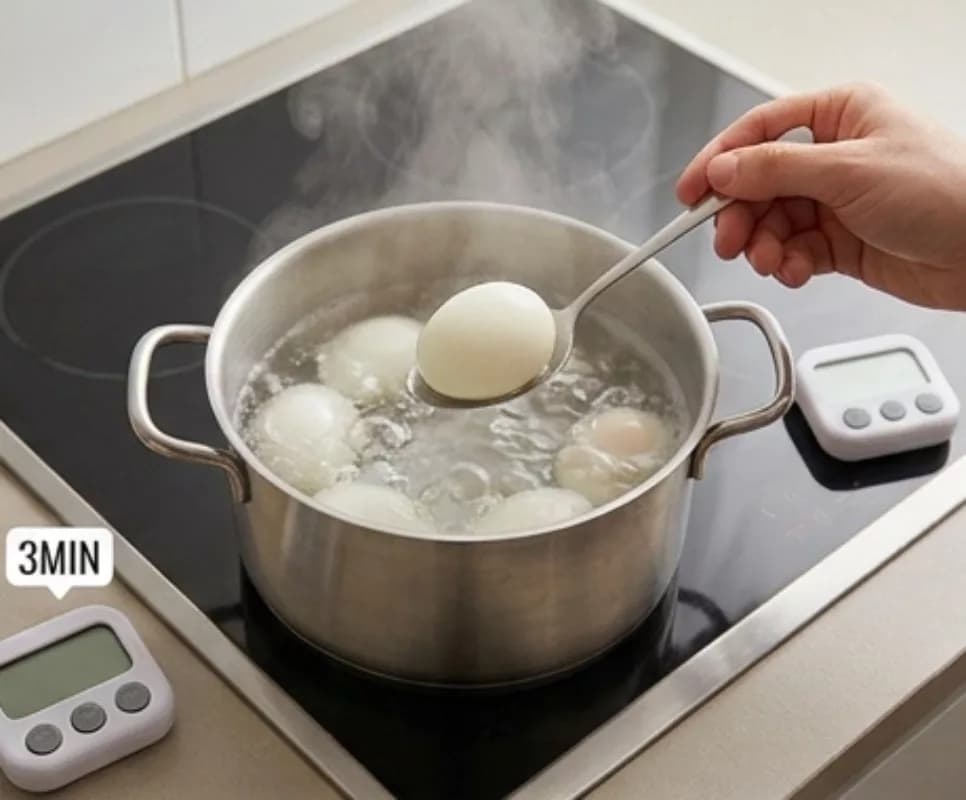
Cook to Your Preference
Start the timer: 3–3.5 minutes for soft-boiled, 4–6 minutes for medium, and 8–10 minutes for hard-boiled. Do not cover the pot.
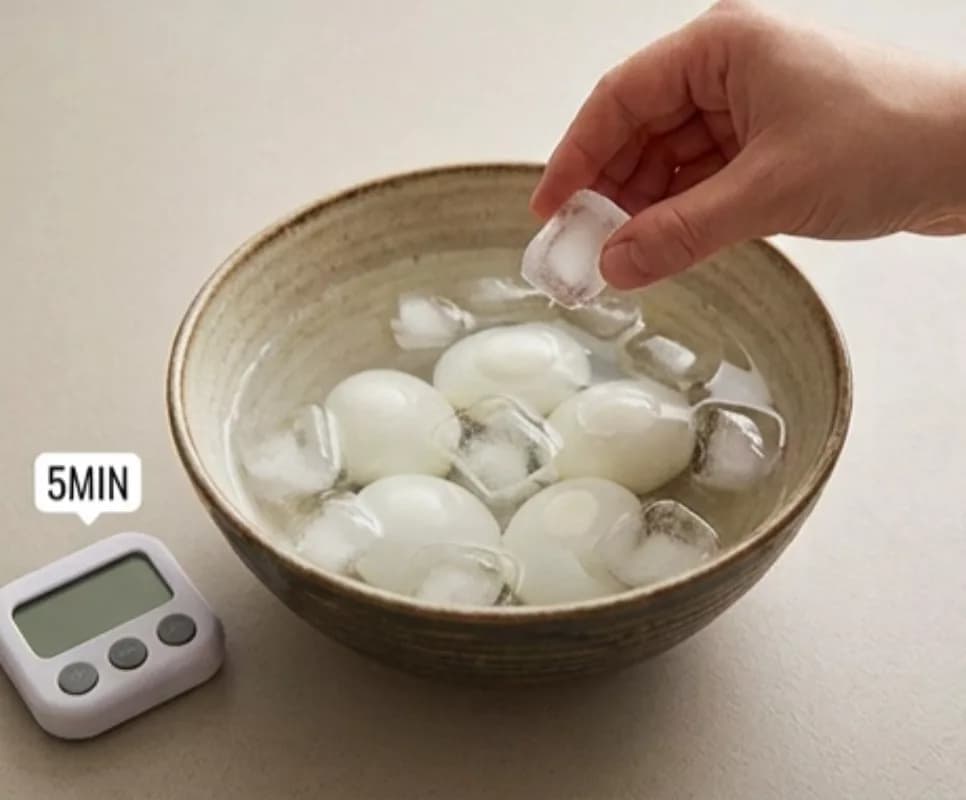
Cool in an Ice Bath
When the timer goes off, turn off the heat, drain the hot water, and immediately cover the eggs with cold water. Add ice for rapid cooling. Leave for 5 minutes.
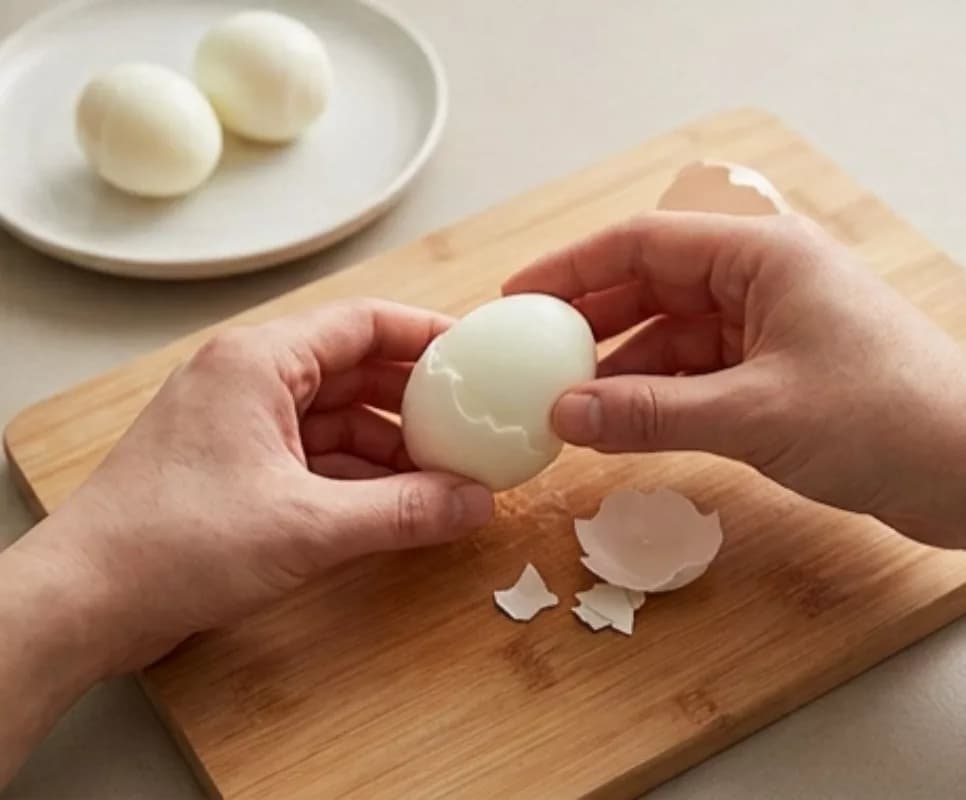
Peel and Serve
Peel the cooled eggs under cold running water, starting from the blunt end where the air pocket is usually located. Serve whole, in salads, on sandwiches, or use as needed.
CHEF'S TIP
Use Room-Temperature Eggs
If you drop a cold egg into boiling water, it may crack. Take eggs out of the fridge 15–20 minutes before boiling or gently place them in warm water first.
Salt Water Prevents Leaks
Add 1 teaspoon of salt to the water before boiling. This helps the egg white set faster in case of a crack, preventing it from leaking out.
Ice Bath for Easy Peeling
After boiling, immediately transfer the eggs to a bowl of ice water for 5 minutes. Rapid cooling shrinks the egg inside the shell, making it easier to peel. Peel under cold running water for best results.
How to Test Freshness
Place an egg in a glass of water: a fresh egg sinks to the bottom, a medium-fresh one stands upright, and a bad one floats. This rule works for any cooking style.
SUBSTITUTIONS
Add your taste
- Quail Eggs Replace chicken eggs with quail eggs. Boil for 1.5–2 minutes (soft), 3 minutes (medium), 5 minutes (hard). Use about 3–4 quail eggs per chicken egg.
- Steaming Instead of Boiling You can steam eggs in a steamer or bamboo basket instead of boiling them in water. Increase cooking time by 2–3 minutes. This method often gives a more tender texture.
- No Salt You can skip salt if you're on a low-sodium diet. In this case, choose only intact eggs and lower them into gently simmering water to minimize the risk of cracks.
- Add Vinegar to Stop White Leaks If an egg cracks and the white starts to escape, add 1 tablespoon of vinegar to the water — it helps the white coagulate faster and stops the leakage.
HOW TO STORE
How to Store Boiled Eggs
Store boiled eggs in the fridge, with or without a container — in their shells, they keep for up to 1 week. Peeled eggs should be eaten within 2–3 days and stored in a sealed container with a damp paper towel to prevent drying. Do not freeze boiled eggs — the white becomes rubbery and unpleasant.
GOOD TO KNOW