

Pork stewed in cheese sauce
WHAT YOU WILL NEED
From ingredients
7 products


SIMPLE PROCESS
Step by step recipe
The key to this dish is the order of adding ingredients. Start by stewing the pork until tender and juicy, then add mushrooms, and finally the sauce components: tomato paste, adjika, and processed cheese. The cheese should be stirred in at the end until completely melted, giving the sauce its creamy consistency. Let the meat absorb all the flavors during the final 15–20 minutes of cooking.
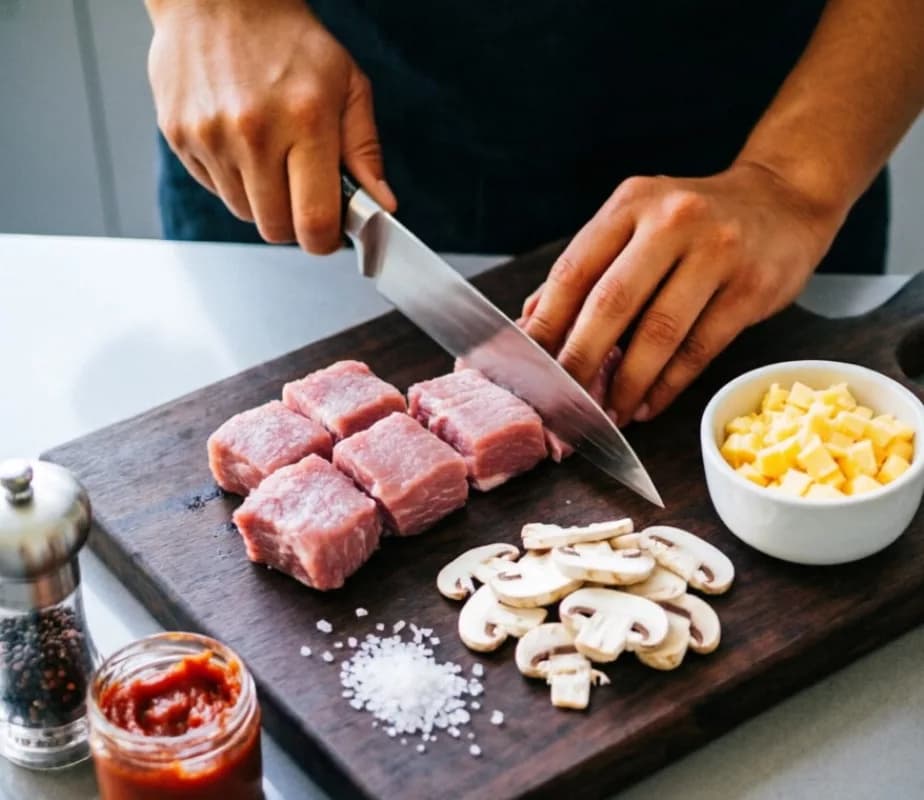
Prep the Ingredients
Cut 1000 g (about 2.2 lb) of pork into 1.5–2 inch chunks. Rinse and slice 500 g (about 1.1 lb) of champignons. Dice 200 g (about 7 oz) of processed cheese for quick melting.
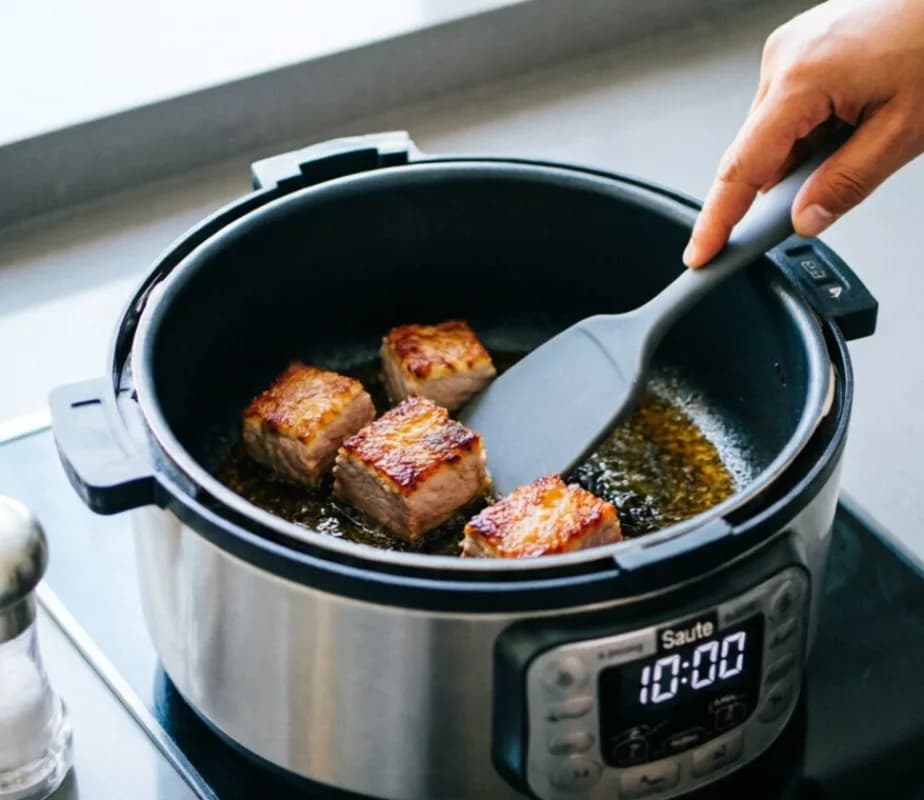
Sear the Pork in the Slow Cooker
Set the slow cooker to 'Sauté' or 'Brown' mode. Sear the pork until lightly browned (about 10 minutes), stirring occasionally. No extra oil needed – the meat releases its own fat.
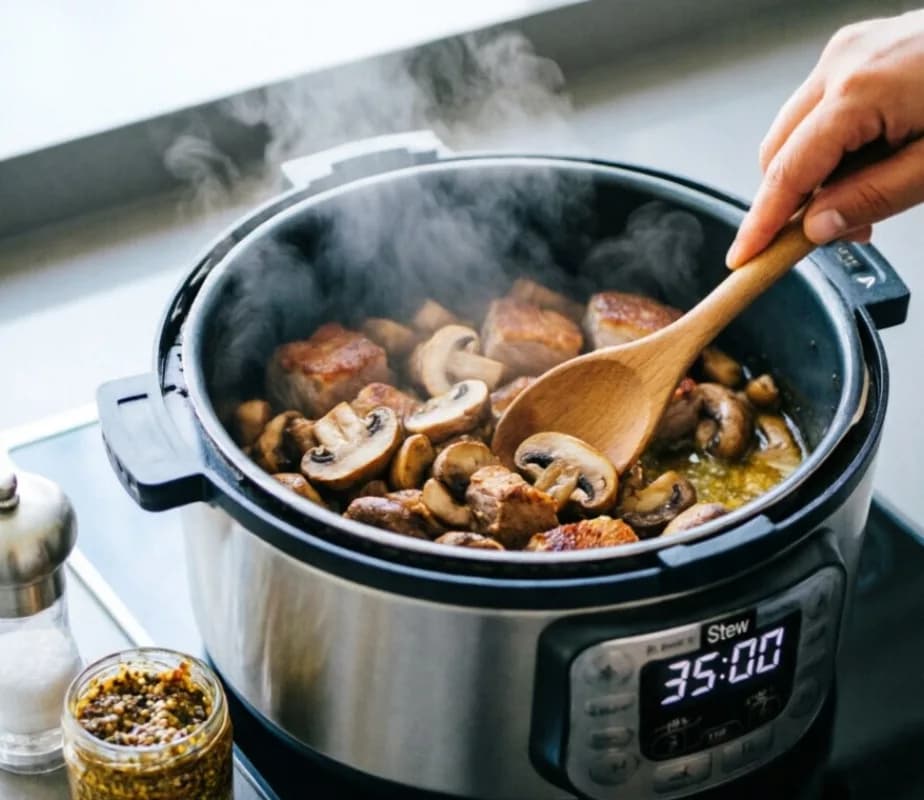
Add Mushrooms and Stew
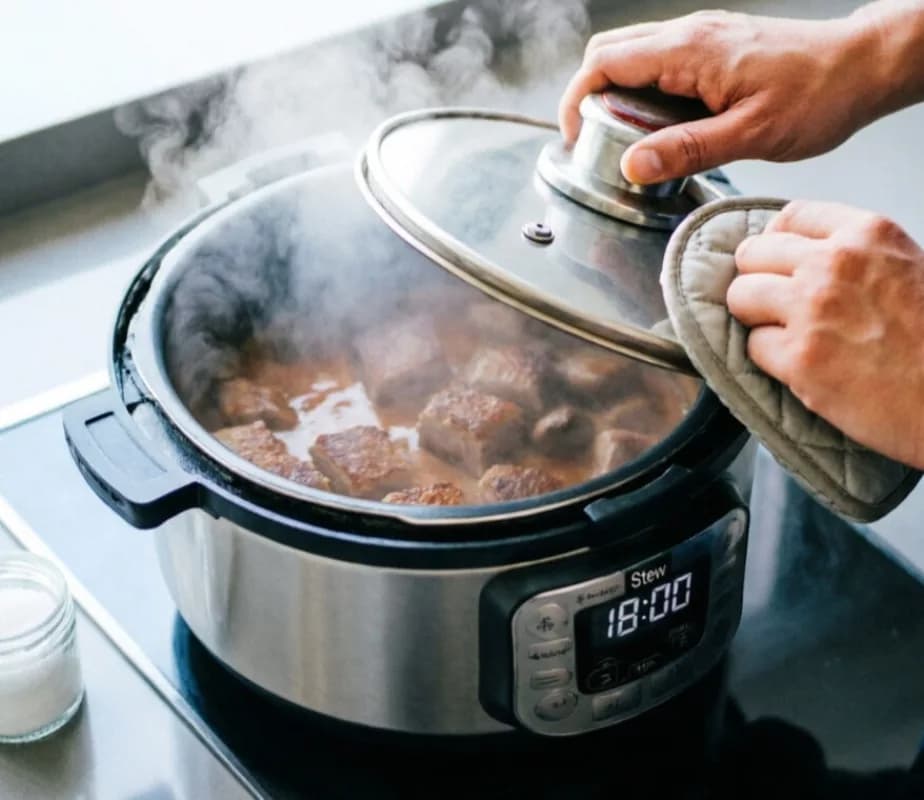
Switch to 'Stew' mode. Add the sliced mushrooms, season with 10 g (about 2 tsp) salt and 5 g (about 1 tsp) black pepper. Cook covered for 30–40 minutes until the meat is tender and the mushrooms have released their juices.
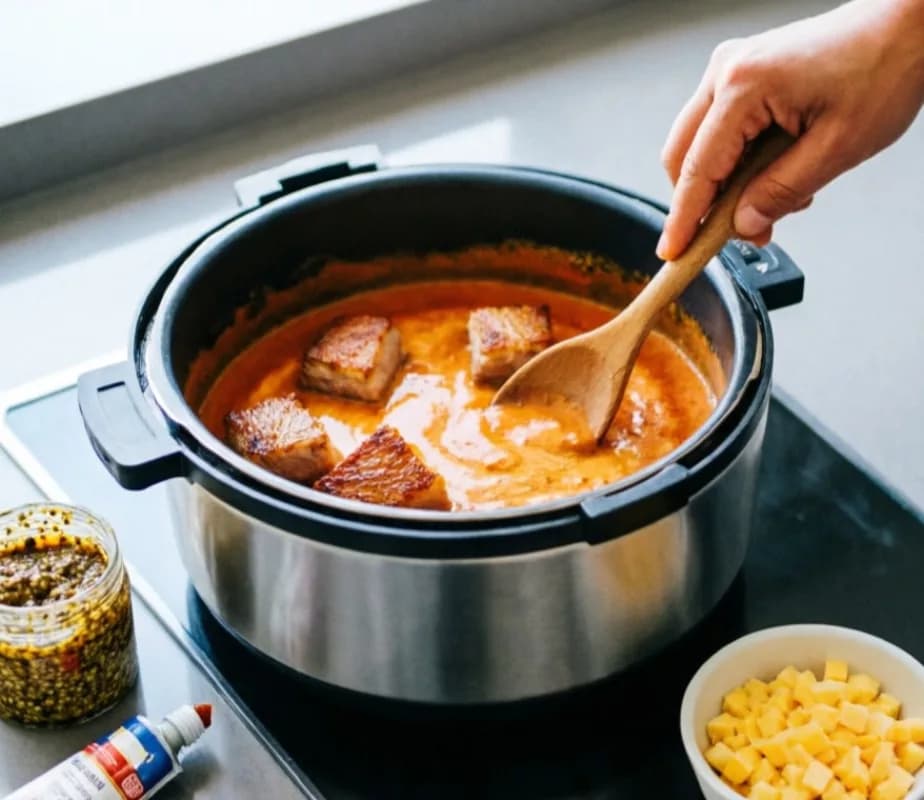
Add the Sauce Ingredients
When the pork is fork-tender, stir in 40 g (about 2.5 tbsp) tomato paste, 40 g (about 2.5 tbsp) adjika, and the diced processed cheese. Mix thoroughly until the cheese is fully melted.
Simmer to Finish
Continue cooking in 'Stew' mode for another 15–20 minutes, stirring occasionally, until the sauce is smooth and the meat has absorbed all the flavors.
Serve
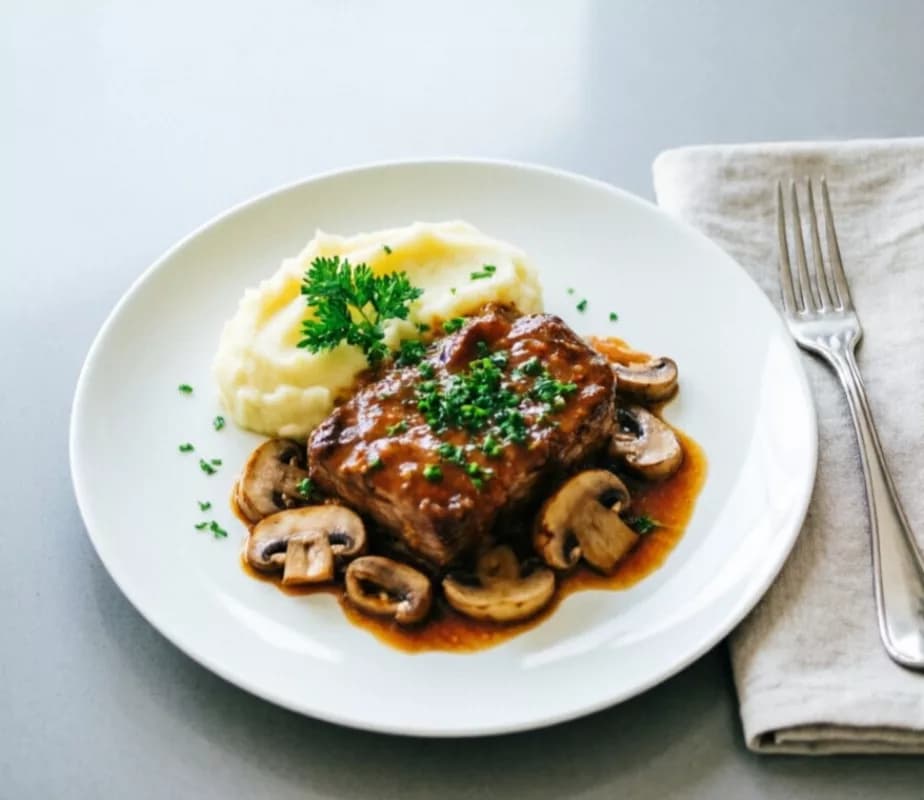
Let the dish rest for 5–10 minutes, then serve hot with your favorite side – mashed potatoes, rice, buckwheat, or pasta. Enjoy!
CHEF'S TIP
Choose the Right Cut of Pork
Shoulder, blade, or belly are best for stewing – they have enough fat to become meltingly tender. Avoid lean tenderloin, which may turn out dry.
Don't Skimp on Processed Cheese
The quality of the cheese directly affects the sauce. Choose processed cheese with high fat content (50%+) and no vegetable fat substitutes for a creamy, smooth result.
Adjust Spiciness with Adjika
You can vary the amount of adjika to taste. For less heat, reduce to 20 g or substitute with sweet paprika. For more kick, add extra.
Check the Meat Before Adding Sauce
Make sure the pork is fork-tender before adding tomato paste and cheese. If it's still tough, continue stewing – adding acidic tomato too early can make the meat stay tough.
SUBSTITUTIONS
Add your taste
- Replace Pork with Beef or Chicken Beef will need longer stewing (up to 1.5 hours), while chicken breast cooks faster (30–40 minutes). Adjust cooking time accordingly.
- Use Other Mushrooms Oyster mushrooms, frozen forest mushrooms, or dried porcini can replace champignons. Soak dried ones in water for 30 minutes beforehand.
- No Adjika? Use Spicy Tomato Mix If adjika is unavailable, replace it with 40 g (about 2.5 tbsp) of tomato sauce mixed with garlic, paprika, and chili flakes to taste.
- Make the Sauce Extra Creamy Add 50–100 ml (about ¼ cup) of heavy cream (20% fat) along with the processed cheese for an even silkier texture.
HOW TO STORE
How to Store Pork in Cheese Sauce
Let the dish cool to room temperature, then transfer to an airtight container. It keeps in the fridge for up to 3 days. Reheat gently in a saucepan over low heat or in the microwave (2–3 minutes). You can freeze it in portions for up to 2 months. Thaw in the fridge overnight and reheat before serving.
GOOD TO KNOW