

Shirataki with Thai style beef
WHAT YOU WILL NEED
From ingredients
11 products


SIMPLE PROCESS
Step by step recipe
The key to this dish is cutting all the ingredients into thin, similarly sized strips. This allows the beef and vegetables to cook quickly while keeping their texture. Use a well-heated skillet and avoid overcrowding it so the beef can brown properly. Rinse the shirataki noodles thoroughly before adding them to the pan. Once combined with the soy sauce, garlic, and vegetables, the noodles only need about five minutes of simmering to absorb the flavors. Avoid overcooking them.
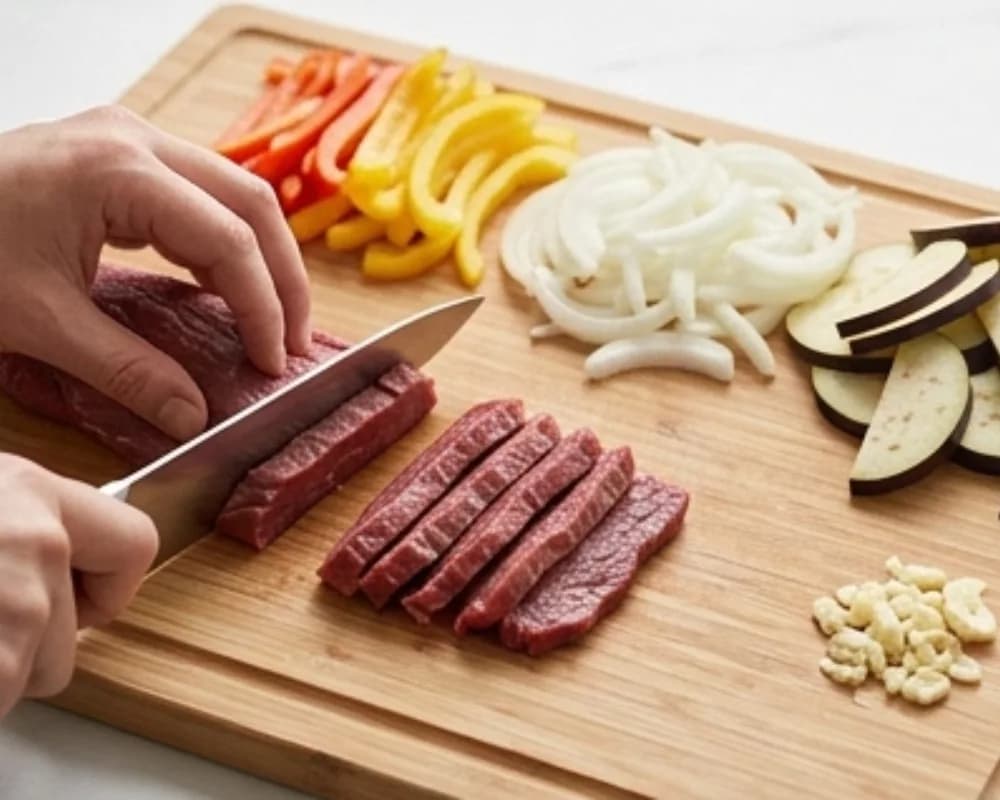
Slice the beef and vegetables
Cut the beef into thin strips across the grain. Slice the bell pepper, onion, and eggplant into similarly thin strips. Prepare the garlic in advance so it is ready to add later.
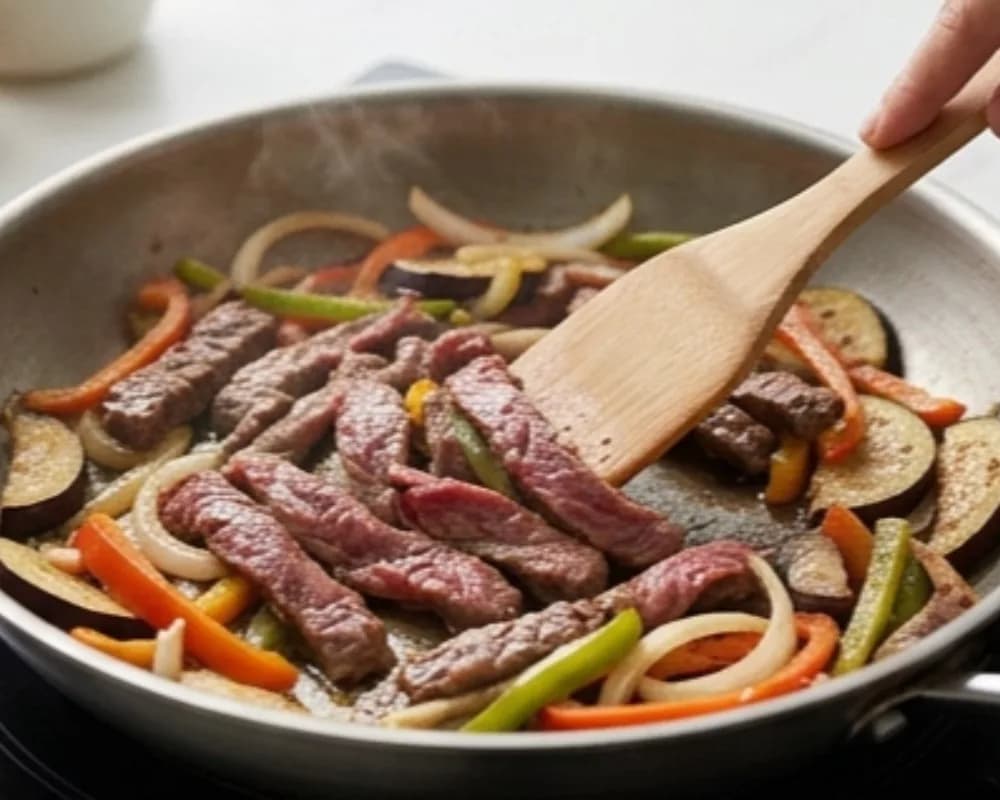
Stir-fry the beef and vegetables
Heat a skillet and add 20 g of olive oil. Add the beef and prepared vegetables. Stir-fry over fairly high heat, stirring occasionally, until the beef is browned and the vegetables have softened slightly while retaining some texture.
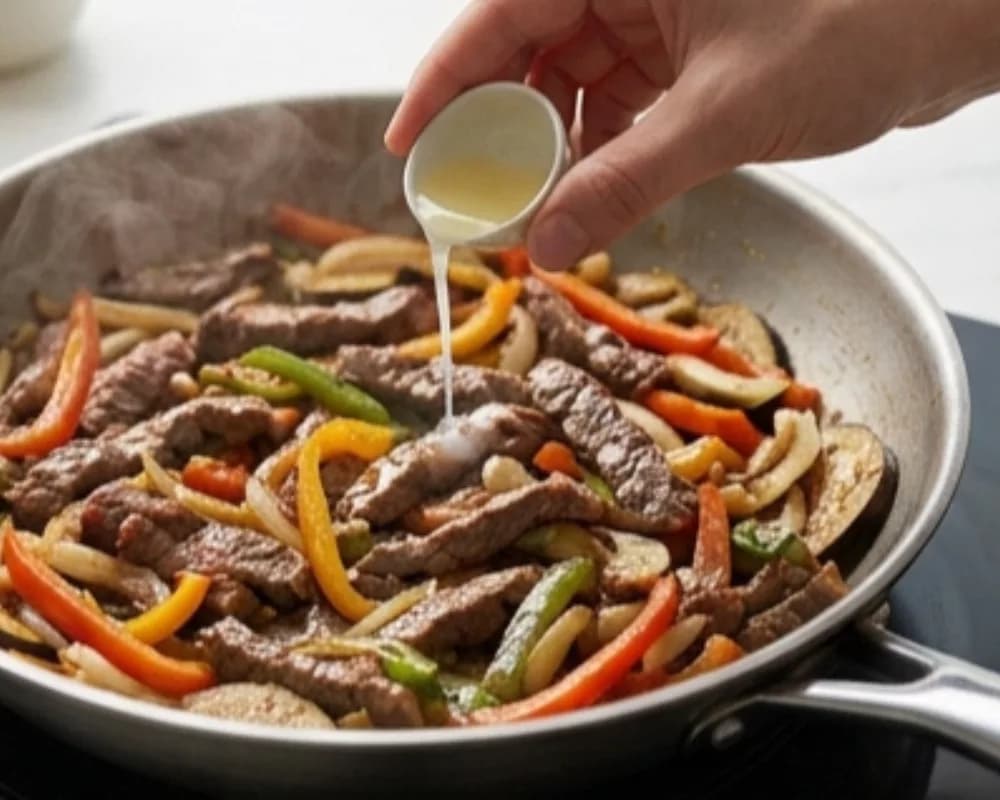
Add the lemon juice
Once the beef and vegetables are nicely browned, drizzle in 5 g of lemon juice. Stir quickly so the bright acidity is distributed evenly throughout the mixture.
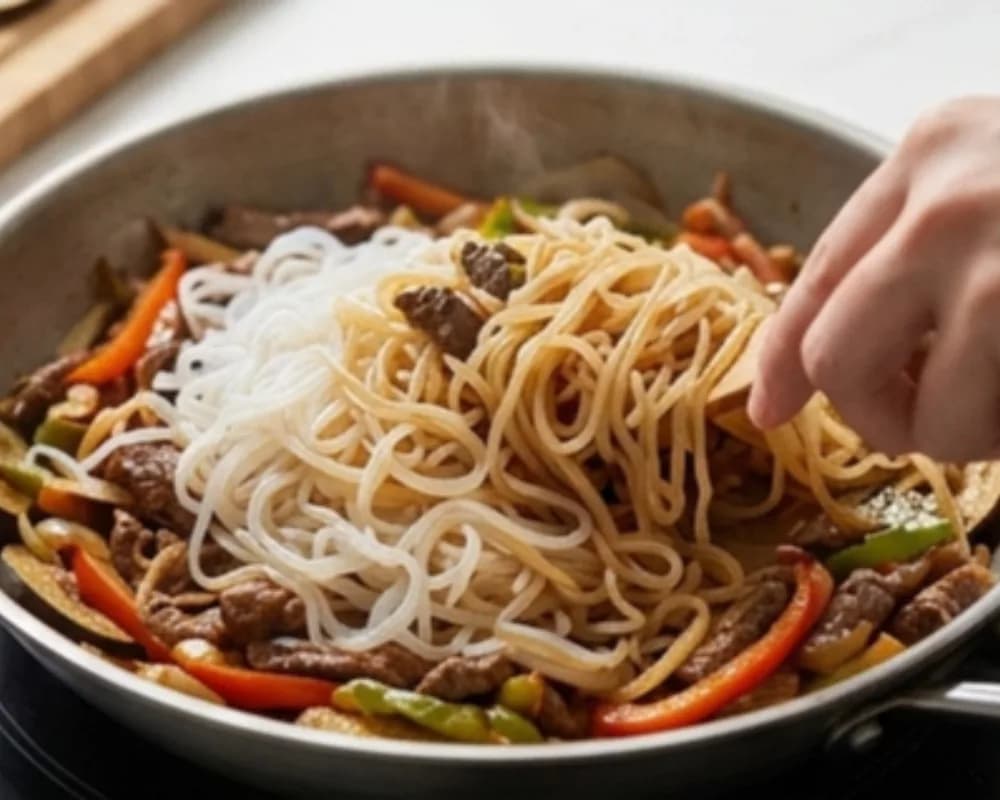
Add shirataki and the sauce
Rinse 200 g of shirataki spaghetti thoroughly. Add it to the skillet together with 30 g of soy sauce, the garlic, and 40 g of water. Toss everything together so the noodles are coated with the fragrant sauce.
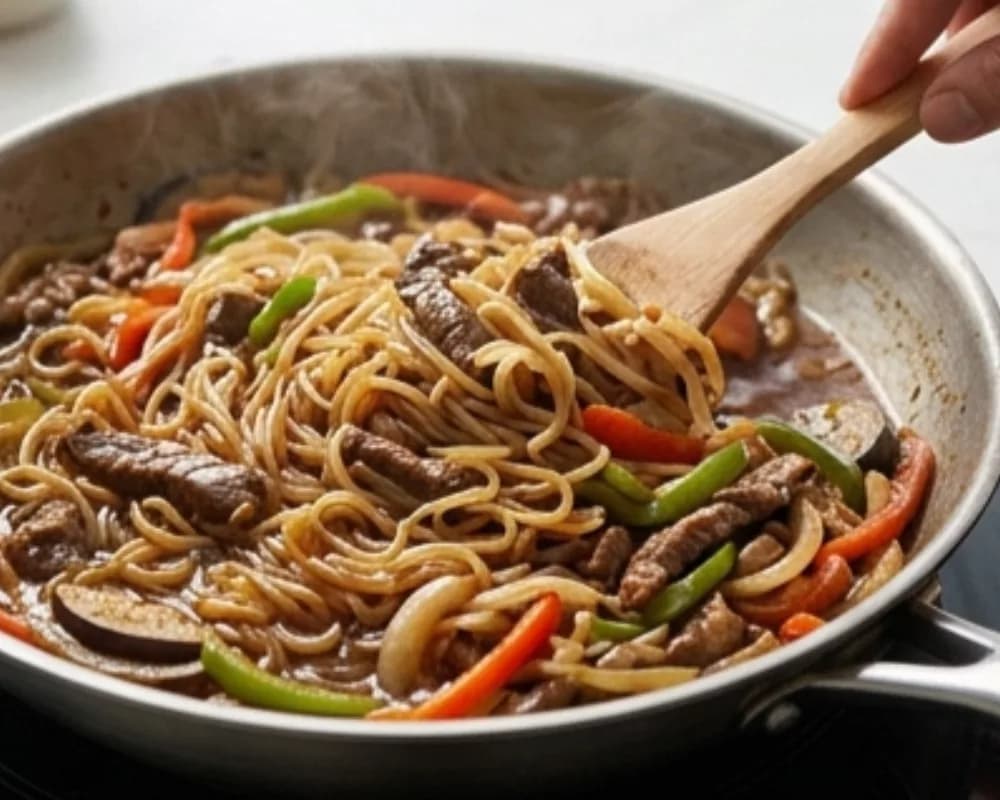
Simmer briefly
Cover the skillet and simmer for about 5 minutes over moderate heat. This gives the shirataki time to absorb the flavors of the soy sauce, garlic, beef, and vegetables. Avoid simmering longer than necessary.
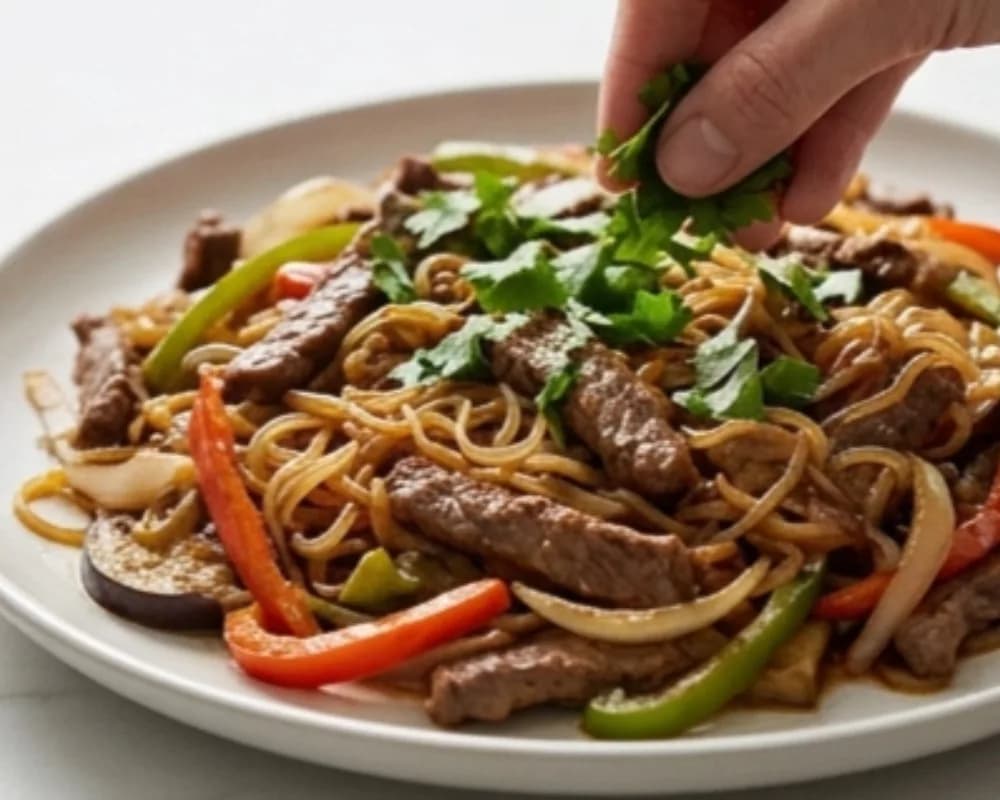
Finish with cilantro and serve
Remove the skillet from the heat and sprinkle with 3 g of fresh cilantro. Toss gently or add the herbs directly before serving. Serve hot while the beef and vegetables are juicy and aromatic.
CHEF'S TIP
Cut everything into thin strips
Slice the beef, bell pepper, onion, and eggplant into thin strips. This helps everything cook quickly and gives every bite a balanced mix of meat and vegetables.
Get the skillet hot
Start with a properly preheated skillet. A hot cooking surface helps the beef brown quickly while keeping the inside juicy.
Always rinse shirataki
Rinse the noodles thoroughly under water before cooking. This helps remove their characteristic storage liquid aroma and lets them take on the flavors of the soy sauce and garlic.
Add lemon at the right moment
A small amount of lemon juice brightens the rich savory flavors of the beef and soy sauce. Add it after the meat and vegetables have been fried for the freshest taste.
SUBSTITUTIONS
Add your taste
- Use another tender beef cut You can replace the tenderloin with another tender beef cut suitable for quick stir-frying. Slice it thinly across the grain for the best texture.
- Skip the eggplant For a simpler, lighter version, you can leave out the eggplant. Beef, bell pepper, onion, and shirataki will still make a flavorful meal.
- Add more vegetables You can increase the amount of bell pepper or onion within the ingredients available in the recipe. Extra vegetables add volume and pleasant texture.
- Make the sauce more intense For a stronger Asian-inspired flavor, you can use slightly more soy sauce. Keep in mind that soy sauce is salty, so avoid adding unnecessary extra salt.
HOW TO STORE
How to Store Thai-Style Shirataki Beef
Let the finished dish cool to room temperature without leaving it out for an extended period. Transfer the shirataki beef to an airtight container and refrigerate for up to 2 days. Reheat gently in a skillet over medium heat or in the microwave, adding a small splash of water if needed. Freezing is not recommended because the vegetables and shirataki may lose their pleasant texture after thawing.
GOOD TO KNOW